Any song I own.
Minus the singer.
Basement Karaoke is a home karaoke studio for the music the big karaoke catalogs skip: emo, pop-punk and post-hardcore. I drop in a song file. It strips the vocals on my own laptop, finds timed lyrics, and puts them on the TV looking like a show flyer taped to a basement wall. It is being built right now, and this page fills in as it ships.
- Status
- Working prototype
- Works today
- One real song, prepared end to end
- Waiting on
- My ears, then a real TV
- Last update
Karaoke catalogs stop where my music starts.
I sing along to bands like Like Roses, Bilmuri and Emarosa. Good luck finding them in a karaoke catalog. When a karaoke version does exist, it is often a re-recorded cover instead of the song I actually know.
So the plan is to make my own from songs I own. The rules were set on day one. It runs on the laptop I already have. No subscriptions and no paid services. My music never gets uploaded anywhere. And nothing gets prepared live while somebody is holding the microphone: songs are made ahead of time, checked, then sung.
If a song has no timed lyrics, it still finishes as an instrumental. The studio never makes up lyrics and does not transcribe them by default.
Four steps, and the last one is my ears.
- Copy and checkThe file is copied in, fingerprinted and decoded start to finish. The original is never touched.
- Find lyricsSynced lyrics are looked up by artist, title and length. Only the song’s name leaves the house, never the audio.
- SeparateThe separator splits the voice from everything else, about seven minutes on the laptop.
- ReviewI listen to the hard parts and give two verdicts: is the instrumental singable, and does the timing land.
The first real song went through on October 23: about nine minutes from file to finished, an instrumental and a vocal track that both pass their checks, and 48 lines of timed lyrics matched to the recording by name and length. Whether it sounds good is a separate question, and only a person can answer it.
Three ways to put words on a TV.
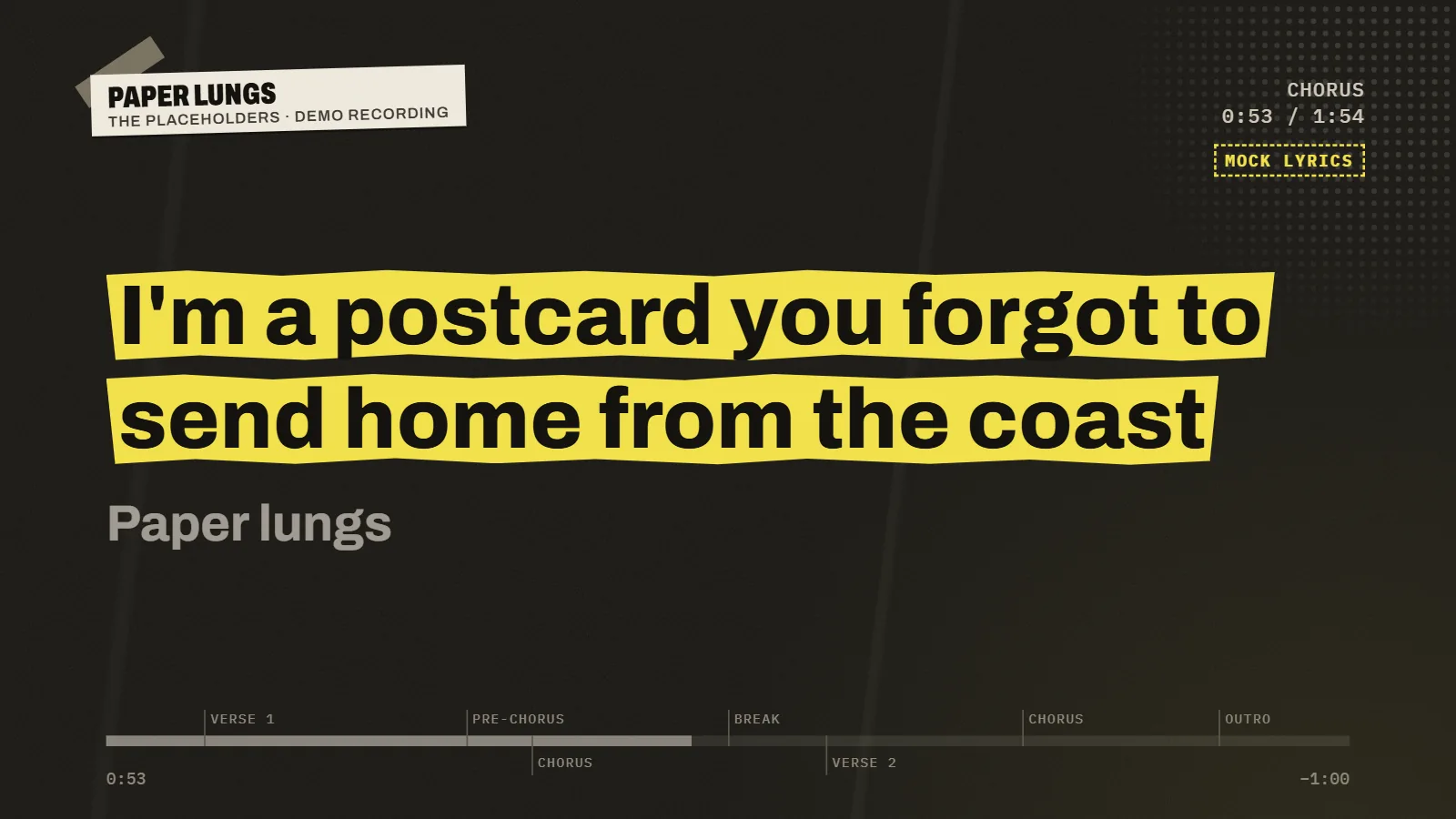
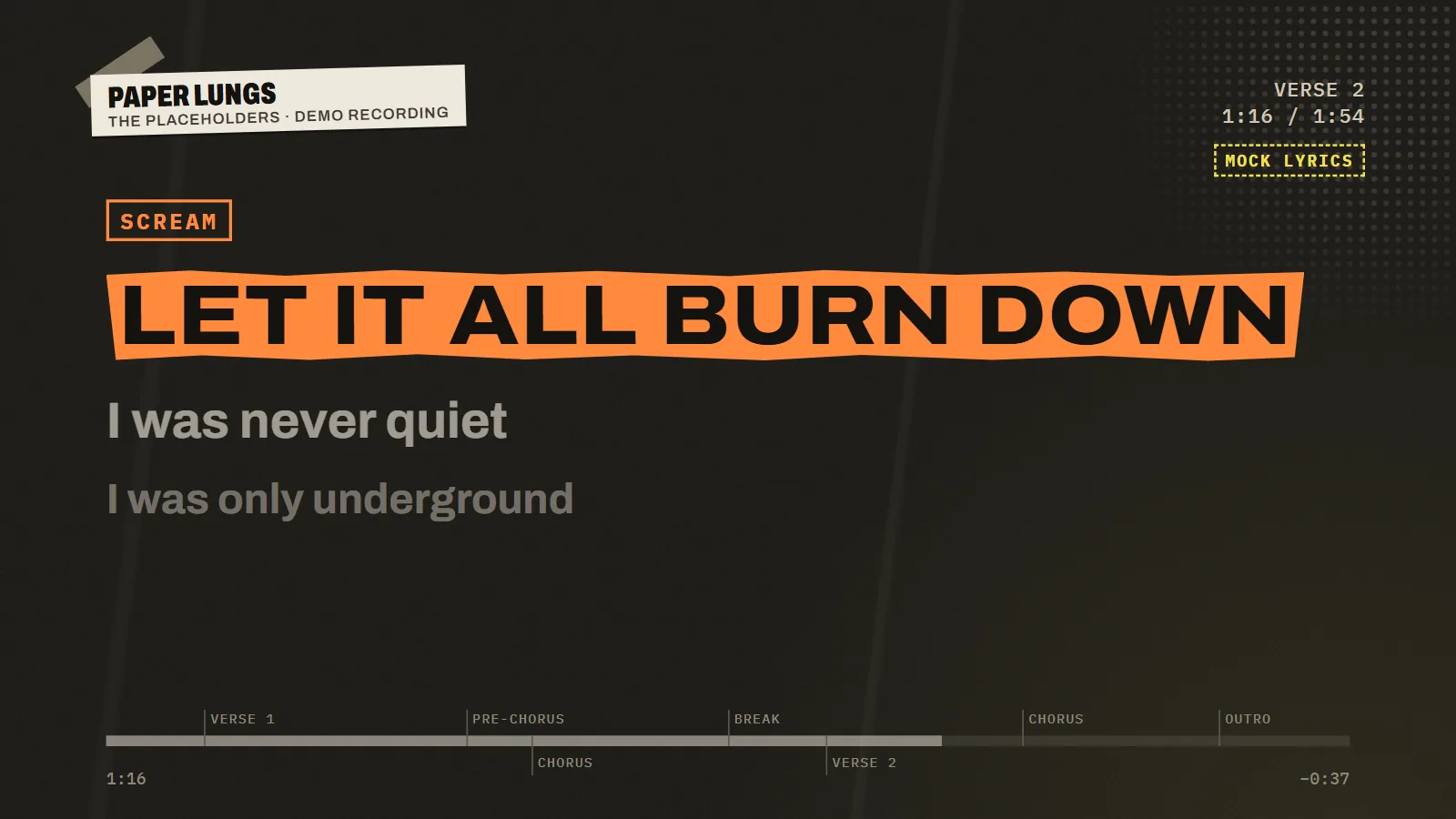
A karaoke screen has one job: you never lose your place, from the couch, mid-scream. Three complete singing screens were designed and run on the same demo song and the same clock, so the only difference was the design. Each one had to survive the hard cases: a long intro, a line too long for one row, an instrumental break, backing vocals, a fast verse with screams, a held last note, and a song with no lyrics at all.
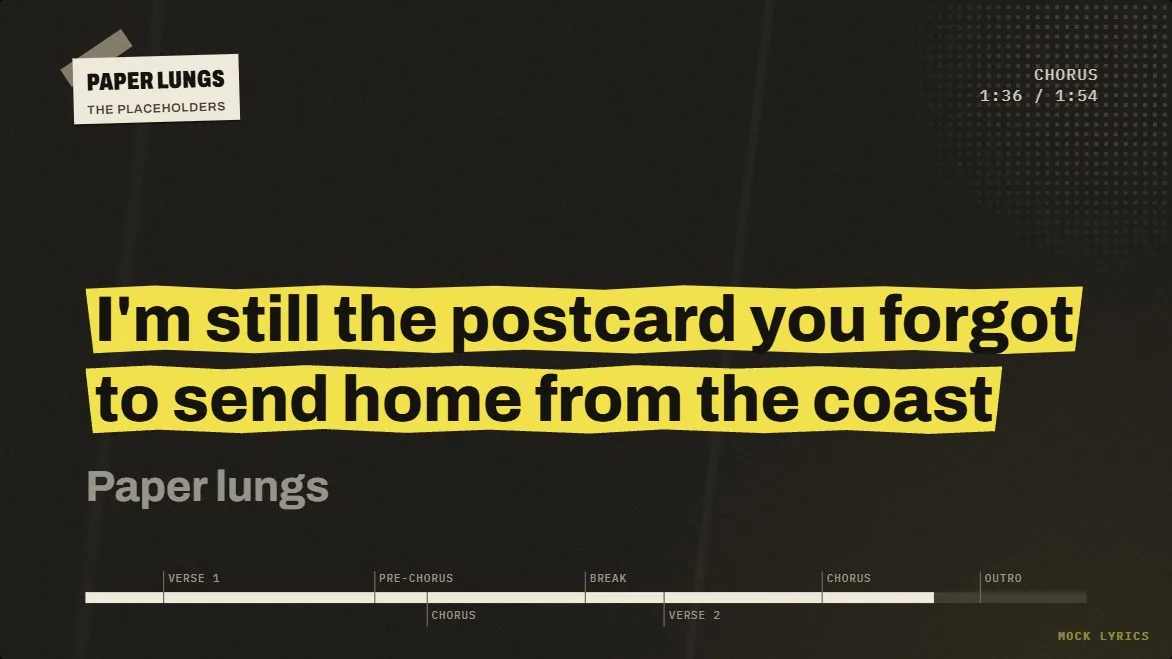

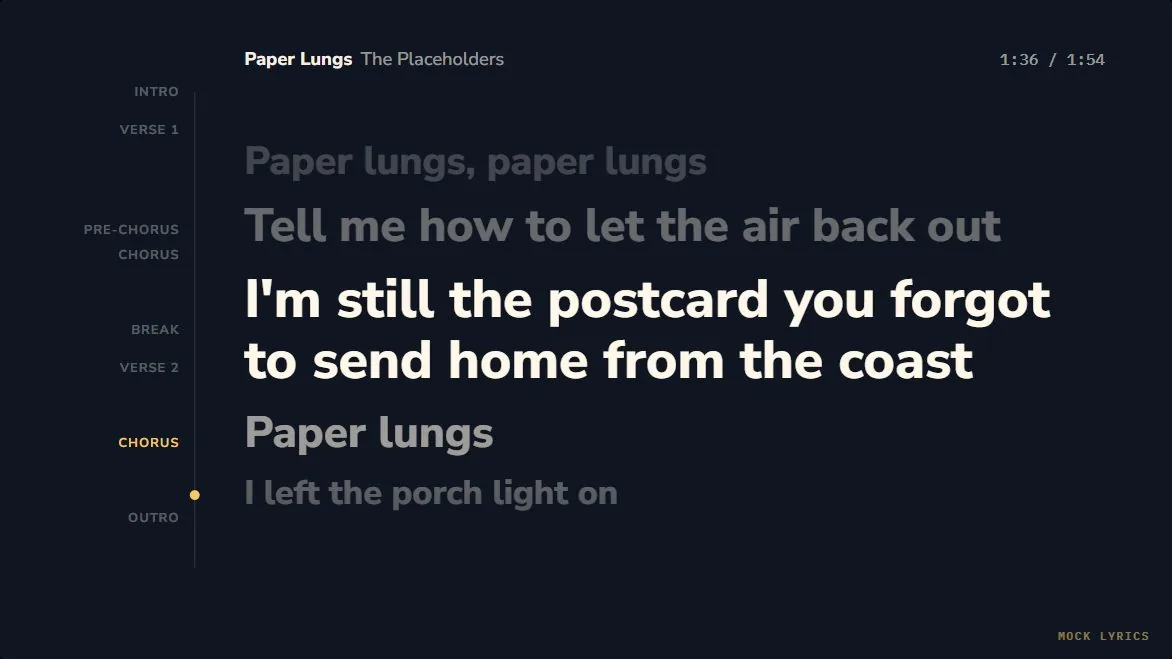
Picked twice, then approved.
The AI agent designing it recommended Basement Flyer. A second model then judged all three from screenshots, with that pick held back, and landed in the same place.
Then I watched it run with a real song through the real pipeline. My review, in full: it slaps.
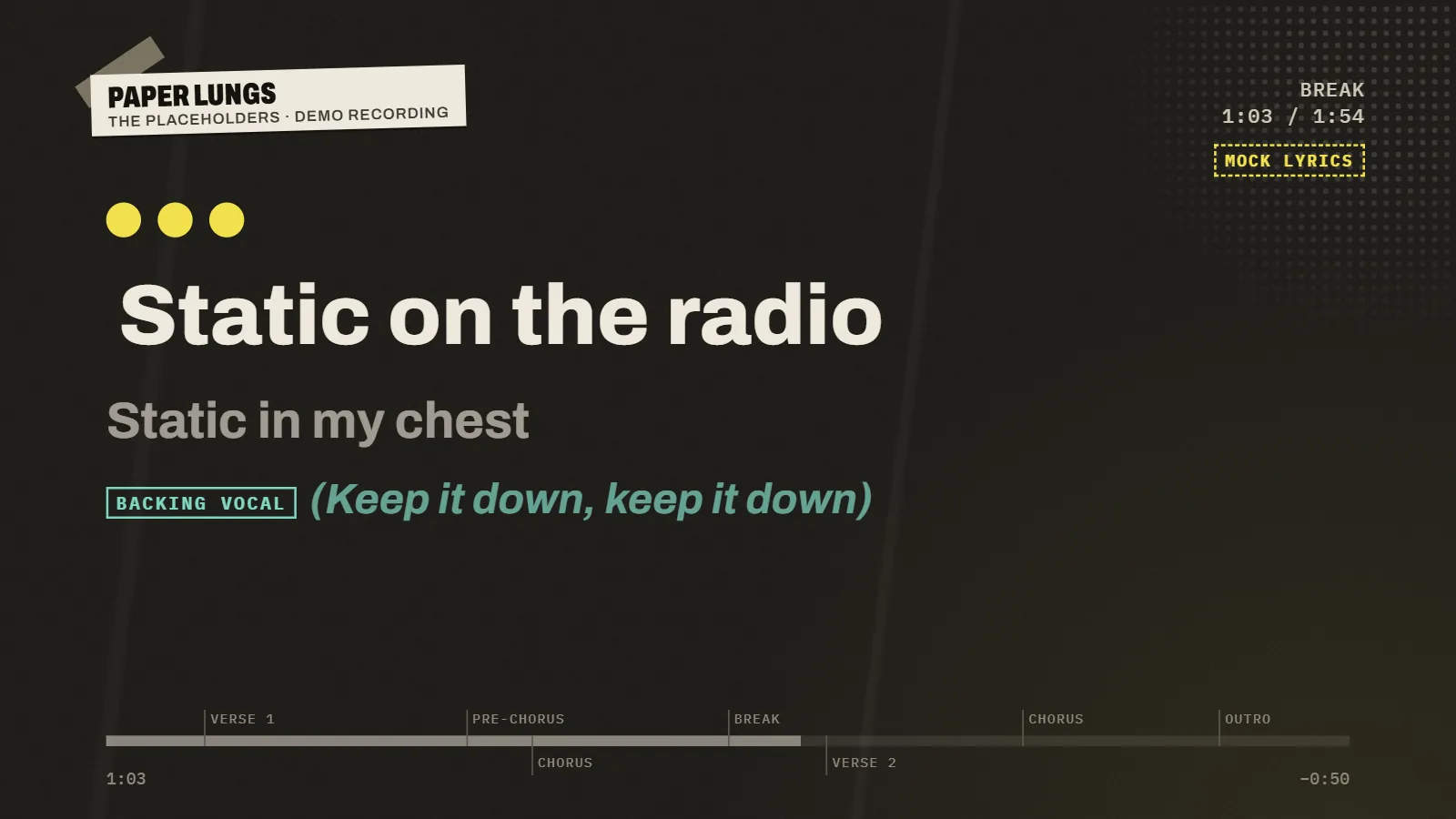
The screens before the screen.
Behind the singing screen is a small workbench: a library, an add-a-song flow, a queue for the night and a review page. It talks to the real pipeline. It also has a mock mode that acts out every state, so the design could be tested before the pipeline produced them.
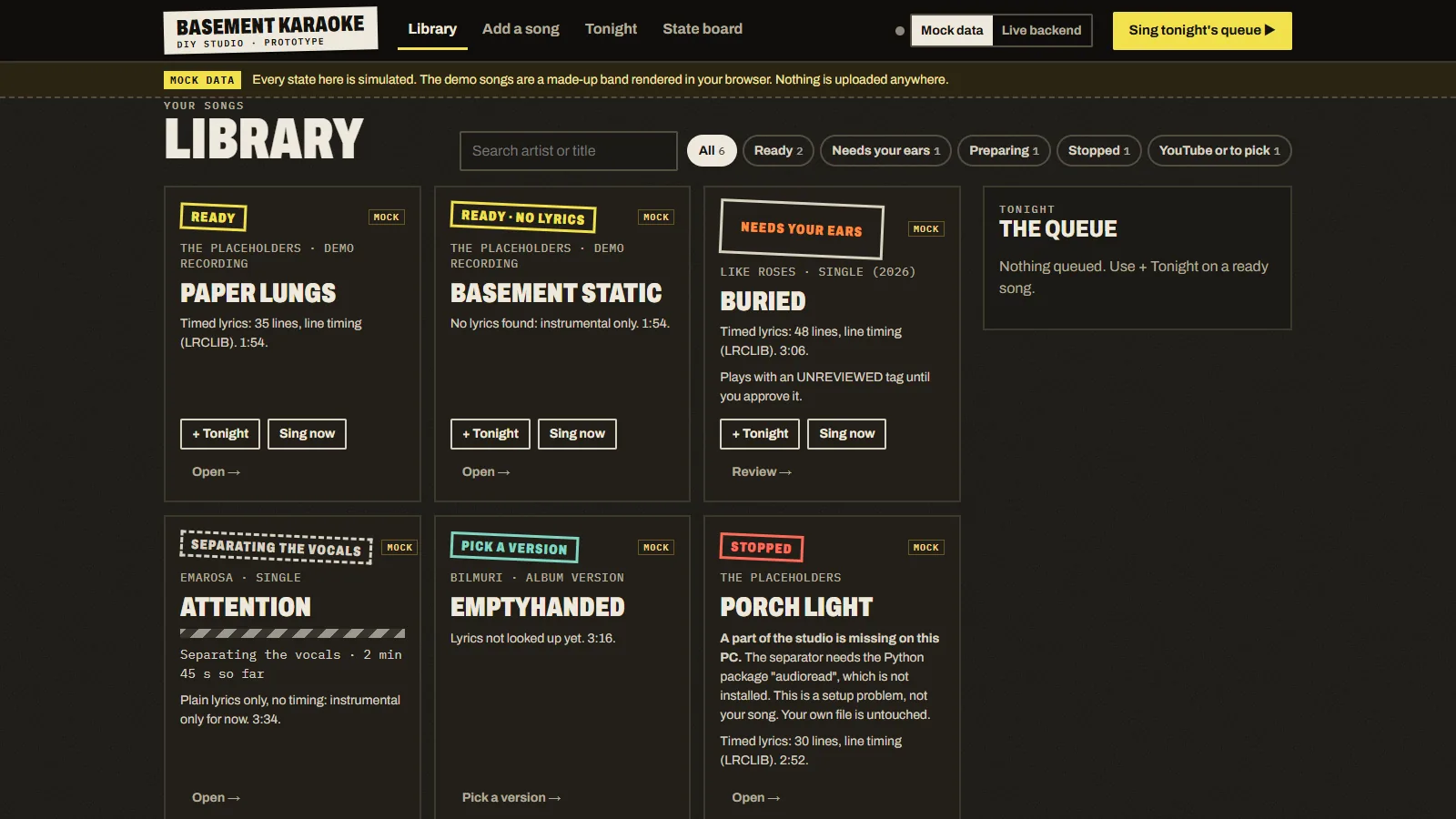
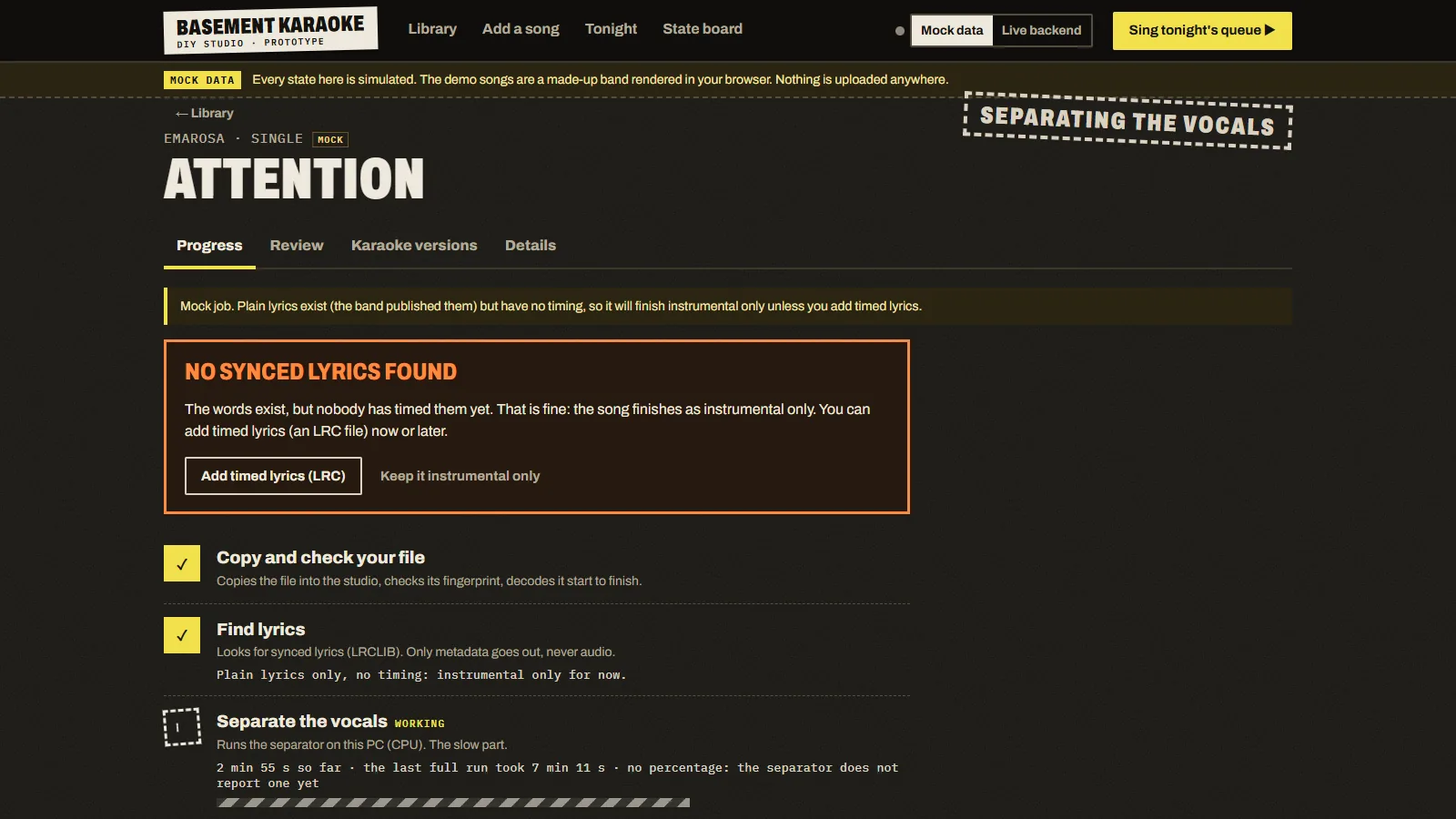
- No fake progress bars. If the pipeline does not report a number, the screen does not draw one.
- Timing nobody has reviewed plays with an UNREVIEWED tag on the TV.
- My listening verdicts and timing nudges save to the pipeline, not just the browser, so they survive a restart.
- If the lyrics change, the old timing approval resets.
- Mock data says it is mock, on every screen.
This part fills in as it ships.
- Verdicts that stick.
My listening verdicts and the timing offset now save to the pipeline itself. The interface passes 80 checks, plus 5 more against the real review route.
- The screen gets picked.
Three directions, a blind outside review, and Basement Flyer chosen. A working prototype with mock and live modes plays the first real song through the real pipeline.
- First real song.
One song prepared end to end in about nine minutes on the laptop: instrumental and vocal tracks that pass their checks, plus 48 timed lyric lines. Listening approval still pending.
- Look before building.
Compared existing open-source karaoke apps, vocal separators and lyric sources before writing anything, then picked three test songs and a $0 software budget.
What is still open.
- My ears. Listen to the first song’s hardest parts and give the two verdicts.
- The room. A real TV, speakers and a microphone, including how much delay the mic adds.
- Clearer failures. Every stopped job says which step failed and whether a retry will help.
- Find before making. Check for an existing karaoke version of a song before processing a new one.
- Word-by-word timing. Parked on purpose. A small experiment comes first; line timing stays until word timing earns its place.
Machine checks are not ears.
Checked so far
Both tracks match the song’s length, are not silent and do not clip. Lyric timestamps are in order and inside the song. The pipeline’s tests cover the job queue, requests from other sites being refused, file paths and cached results. The interface has 80 checks across mock and live modes.
Not proven yet
Nobody has signed off on how the first song sounds. That is my job, and it is next. Screams, overlapping singers and long held notes are the hard cases for any separator, and they are untested in the room. No TV, speaker or microphone test yet.
About the pictures. The singing screens show The Placeholders, a band that does not exist, singing lyrics written for this demo. Song titles in the library are labeled mock. Real recordings and their lyrics stay on my own machine and never appear on this site.
Record assembled from the project brief, decision log, design study, handoff notes and test results through October 23, 2026. Built by Mark Salisbury with AI collaborators: Codex built the audio pipeline and the local service; Claude designed and built the interface. Outside reviews by other models ran through TeamLoop.